Ever since the first Serpentine Pavilion designed by the late Zaha Hadid wowed visitors 23 years ago, this annual celebration of architecture has been a highlight of the gallery’s calendar, taking over its grounds in Kensington Gardens. This year, the gauntlet has passed to Lina Ghotmeh, the French-Lebanese architect whose sensitive and sustainable approach has produced work that includes Hermès’s low-carbon workshop in Normandy and Réalimenter Masséna, a visionary housing block in Paris’s 13th arrondissement.
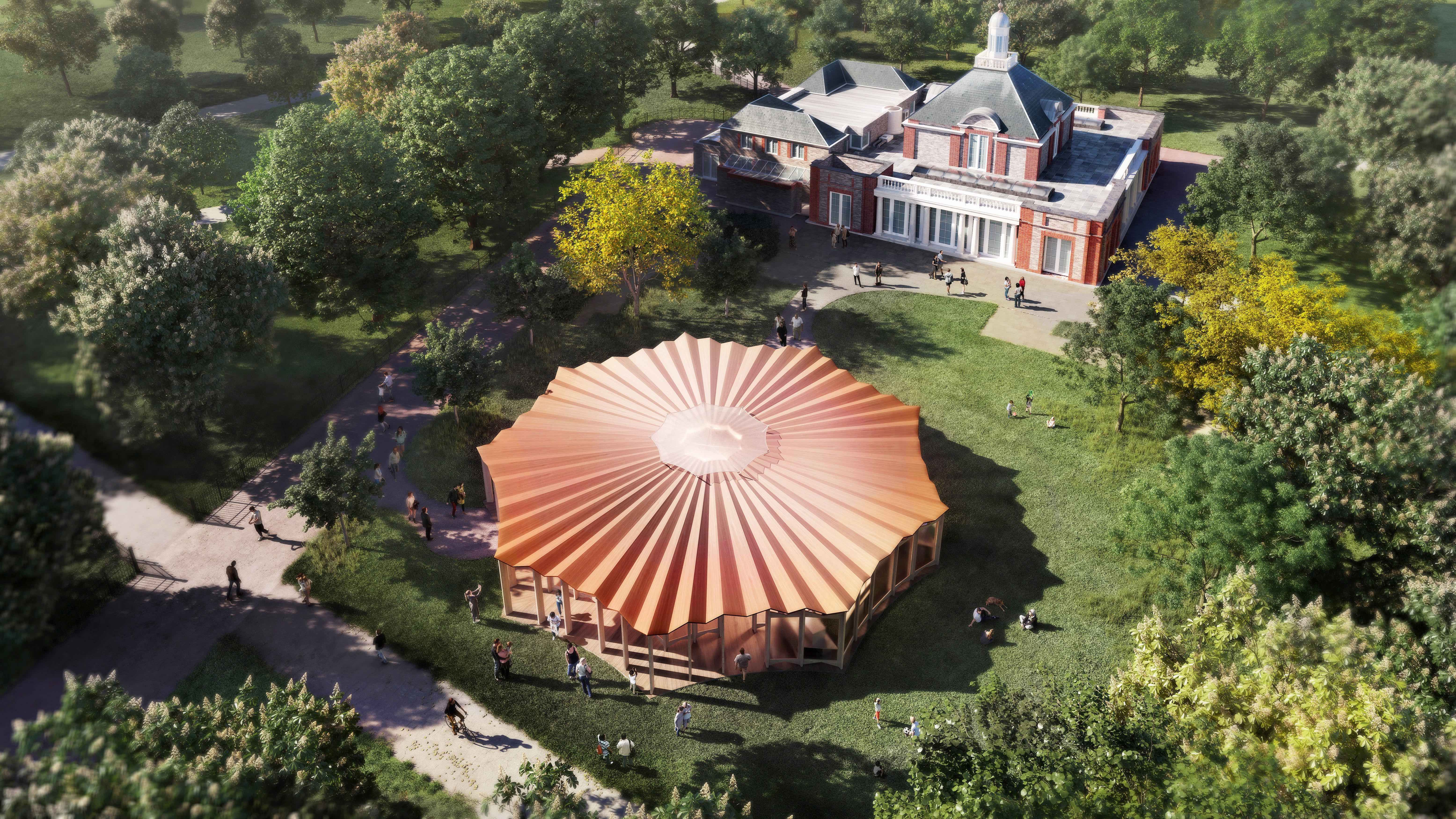
Her pavilion, entitled ‘Á Table’, is open until 29 October, and is her first-ever structure to be built in the UK.

As its name suggests, the heart of this year’s pavilion is the table at its centre – a circular design formed from 25 individual pieces of furniture, which will be paired with 57 specially made wooden stools.
What's everyone reading?
Manufactured by The Conran Shop, which has worked with Ghotmeh since November, transforming her sketches into physical products, these architectural designs, crafted from American oak and stained to produce a dark-red finish, will be available to purchase (desks, £1,595; stools, £325).
They are a takeaway token of the pavilion’s ethos. ‘The design grew from my desire to bring people together at a table, seated, in a celebratory manner amidst nature. Sharing what best ties them to earth: food and sustenance,’ explains Ghotmeh.

What will also be shared is ideas. Taking inspiration from togunas (communal structures in Mali where wise people meet to talk about the issues of the day), the pavilion’s inviting architecture – ‘an open, concentric form with a gallery running around its perimeter’ – makes it an ideal spot for meaningful discussions.
Two of the hottest topics are sure to be nature and sustainability. Ghotmeh is heavily inspired by the former, with her tent-like design’s concave edges mimicking the canopies of the surrounding trees and its timber construction influenced by the structure of leaves when viewed through a microscope. Environmental responsibility was also a key concern: ‘I wished for the pavilion to have the lowest carbon-embedded footprint possible through its whole life cycle,’ says Ghotmeh. Oak was a great material, as ‘it’s quick to assemble, but also to disassemble, meaning it can be rebuilt or repurposed’.
And the tables and stools? To Ghotmeh they are physical memories of the pavilion. ‘If an encounter were to happen here, a lovely moment to be remembered, why not take a piece of it home?’ she asks. Why not indeed? conranshop.co.uk