
Few design periods inspire as much fervent ardour than mid-century. The postwar movement, spanning roughly from the 1940s to the 1960s, was radically forward-thinking and represented a shift in lifestyle that is still evident today. These projects from the ELLE Decoration archive all interpret the mid-century home in a unique way, showcasing the longevity of this significant design era.
Coastal cool meets Le Corbusier in this LA home
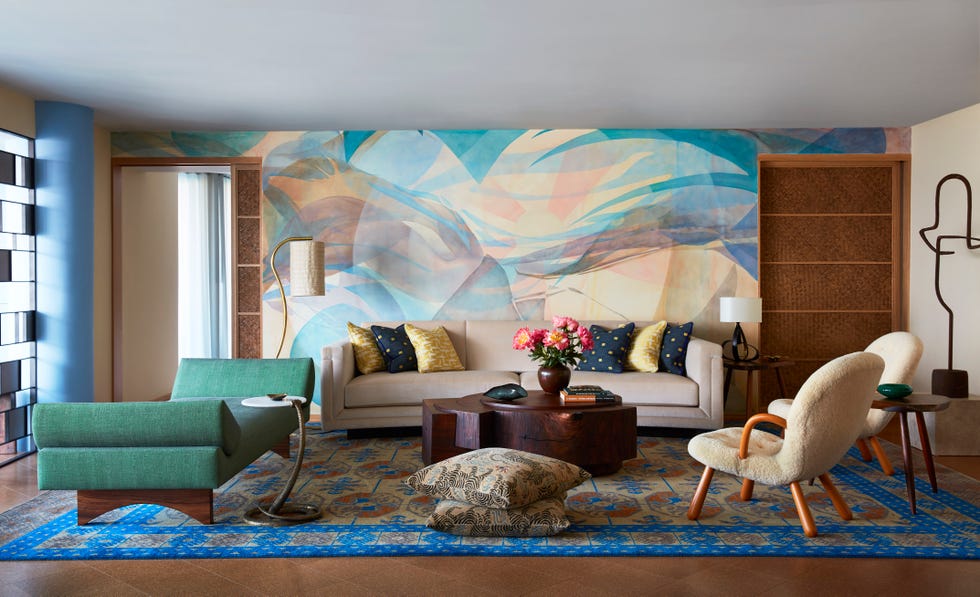
The iconic architect’s Maison La Roche inspired much of this apartment’s interior while the homeowner, the Hollywood talent manager Evelyn O’Neill, was also seeking a ‘zen beach house’ feel. Design studio Commune first had to gut the apartment, housed in a 1960s high rise, due to extensive water damage and then set about fusing a modernist colour palette with influences drawn from the surrounding coastline to create a relaxed, uplifting space.
A piece of architectural history in London

The Barbican Estate is one of Britain’s most iconic examples of mid-century Brutalist architecture. This revered status has the potential to intimidate designers and homeowners who want to honour its original features whilst not creating a pastiche to the past. Andrew Griffiths, founder of A New Day, approached the reinvention of this apartment in the Lauderdale Tower by embracing the quiet serenity of the estate through soft furnishings, a gentle palette of pale pink, butter yellow and olive green, as well as diaphanous sheers that filter the city views.
A mid-century modern masterpiece

John Lautner’s Silvertop house is an enduring example of the forward-thinking mentality of mid-century architects. He experimented with sculptural uses of cement and installed the first-ever infinity pool, devised a cantilevered driveway, and created vast, curved glass walls. In 2014 architect Barbara Bendoza was brought onboard by the home’s new owner to gently bring the property into the 21st century while honouring its legacy.
This London home is an homage to the 1970s

It was the renovation of designer Louis Hagen Hall’s own home that initially attracted these homeowners, who were seeking an open-plan, LA-inspired home in London. Influenced by architect John Lautner and the design principles of Charles and Ray Eames, Hall took these principles, applied retro colours like burnt orange and mustard and paired them with a mid-century material palette including cork, elm and smoked glass to create a vintage-esque home perfectly suited to modern life.
The iconic ‘instant house’ in Indiana

This prefabricated home is a piece of living architectural history. Part of a period of revolutionary urban planning, the Frost House, as it’s known, was one of 22 models by designed by architect Emil Tessin. The ‘Model 2340’ was designed in collaboration with American designer Paul McCobb and furniture brand Knoll. Dr Robert Frost and his wife Amelia were the original owners, purchasing the home in 1964, and some 50 years later Karen Valentine and her partner Bob Coscarelli got the keys. With almost all the original features preserved, including the working appliances, they simply updated the flooring and brought in furniture.
What's everyone reading?
A mid-century gem with an unexpected interior

A deep appreciation of mid-century architecture is in the blood of Dulwich Estate resident Tim McInnes. His father Ian, a retired architect and former chairman of the Twentieth Century Society, authored a book about Dulwich’s 1960s houses. Born and raised in the south London area, when a rare townhouse became available Tim didn’t hesitate to put his personal stamp on a classic home. ‘I’m a 43-year-old man who likes 17th-century Dutch paintings – I’m not going to pretend that’s not the case,’ he says of his eclectic taste. ‘I’ve got stuff that doesn’t “fit”, but find me a house where everything is of the right period.’
The 1960s home saved from demolition

This ex-local authority home in south London had been neglected for years until Novak Hiles Architects took on its reinvention. Poor ventilation had led to extensive damp in the property, so the firm focussed on improving airflow. This led to the development of innovative decorative perforated brickwork screens paired with thermal insulation and glazing to create an energy efficient home. When it came to the interior decorating, mid-century influences such as fluted glass panels, terrazzo worktops and an oak-panelled kitchen were installed.
The LA home with Bauhaus influences

‘We’re not preservationists. You aren’t going into a museum,’ says Joelle Kutner, co-founder of design studio Ome Dezin. Along with partner Jesse Rudolph, the pair approached the renovation of this 1950s home in Brentwood with the intention of retaining the home’s character while reconfiguring the layout to make sense for modern family life. When it came to the design, it was the primary colours and sparse ornamentation of the Bauhaus movement that informed the palette and carefully considered furniture pieces.
A reimagined Bush Modern home
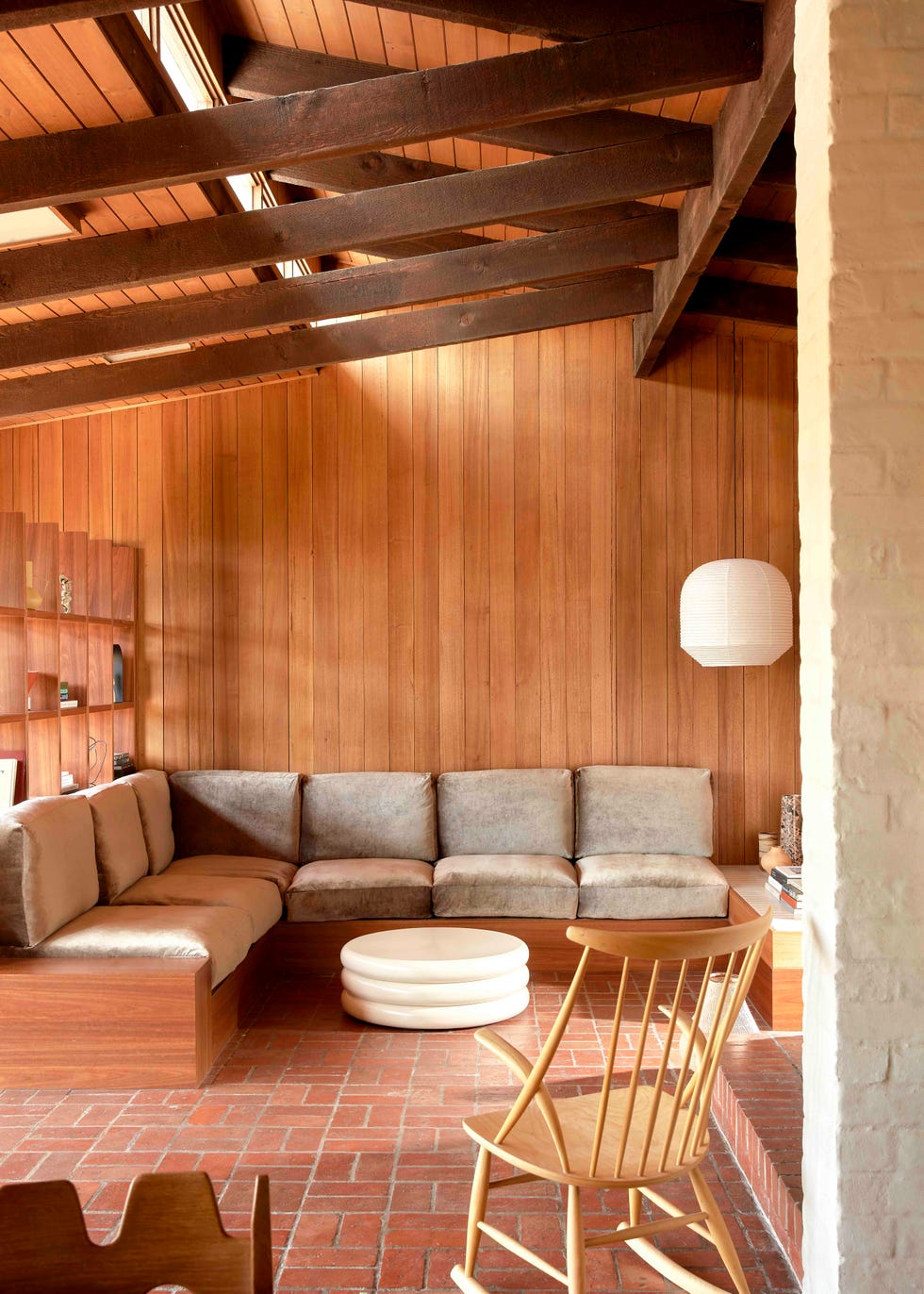
Bush modernism was a niche chapter of mid-century architecture that emerged from Australia’s fringe suburbs. Built by self-taught designer and builder Alistair Knox in 1969, some 50 years later this home on the outskirts of Melbourne was updated by new homeowners, photographer Sean Fennessy and art director Jessica Lillico, with the help of architect Adriana Hanna. ‘To us, this home encapsulates the more robust take on mid-century design that was happening in the bush suburbs around Melbourne,’ they say.
The home within a landmark building

When furniture designer Mark Grattan moved into his Mexico City apartment, housed within an iconic building by the late great architect Luis Barragán, he knew the design process couldn’t be rushed. One year later, he began working on the space he had become intimately acquainted with. Embracing with original mid-century features like paned windows and interiors wooden doors, he built much of the furniture himself, including his bestselling ‘Docked En Rio’ platform bed in a custom kingsize.


