Based in Milan, Belgian-Italian duo Frederik De Wachter and Alberto Artesani are the co-founders of DWA Design Studio, a multidisciplinary practice that creates everything from apartments and hotels to workspaces and site-specific installations. Their shared sensibilities led to the studio’s formation in 2005, and it now has brands such as Salvatore Ferragamo, Airbnb and Atelier Swarovski on its client list.

‘We both like to look at anonymous design and craftsmanship,’ says De Wachter, who studied interior architecture at Ghent University before focusing on temporary installations. ‘Travel’s a great inspiration,’ adds Artesani, who trained as an architect at the Polytechnic University of Milan and mainly designed fashion-retail spaces early in his career. ‘A simple detail on a Greek country house can inspire us as much as a famous building,’ he says.
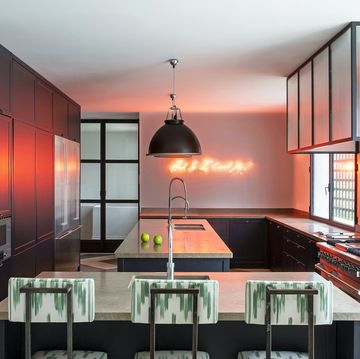
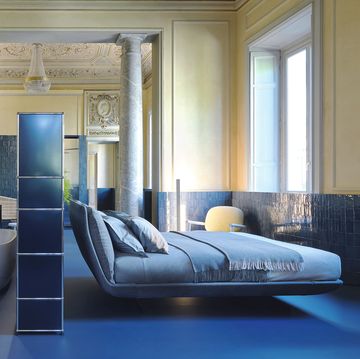
What’s their style? Fearlessly blending old and new before adding a wealth of unexpected contrasts, the duo’s interiors are a continuous dialogue between different inspirations. ‘We like to mix high and low, simple and complex, minimalism and abundance, pure lines and embellishing details,’ explains De Wachter.

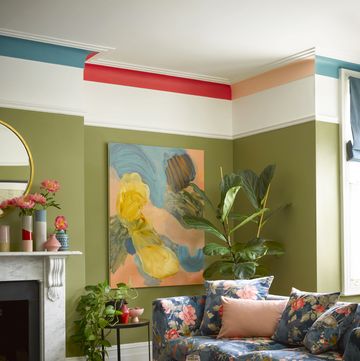
Their spaces also reveal a dynamic approach to colour, for its natural patterns – it adds warmth and has a contemporary feel,’ says De Wachter. In contrast, the studio’s Artist House for Airbnb in Civita di Bagnoregio, a 13th-century village in central Italy, saw them renovate an ancient stone house with bright colours and adaptable rooms.
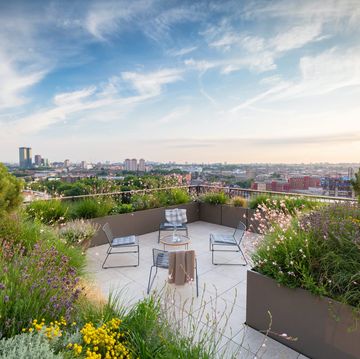
During the pandemic, they designed a Milan office for real-estate company Covivio. ‘The timing is reflected in the project, with outdoor spaces used for gathering and work,’ explains De Wachter. The interior is inspired by the post-war Milanese buildings visible from the roof terrace, while the lobby floor is made from Silipol, a terrazzo-style material used by architect Franco Albini on the walls of the Milanese metro stations.

What are they currently working on? A new womenswear floor for La Rinascente, the department store in Rome, which includes different design concepts for each clothing category. ‘It had to be flexible, but without compromising the overall aesthetic appeal,’ says De Wachter.
What's everyone reading?
The studio is also currently renovating a 1940s villa on Lake Como, which is proving equally challenging. ‘The building site is only accessible on foot via a narrow pathway,’ notes Artesani.
They say: ‘We both love the element of surprise – the small details that can reinvent objects, freeing them from their ordinary functions.’ dw-a.it

Expert advice
DWA Design Studio on how to create eye-catching, memorable interiors
We like to use colour to make our spaces impactful. One way to do this is to use a strong shade to emphasise a particular zone. For example, in an apartment we designed in Milan, the entrance isn’t physically divided from the rest of the space but, thanks to stripes of oxblood-red paint, it feels separate.
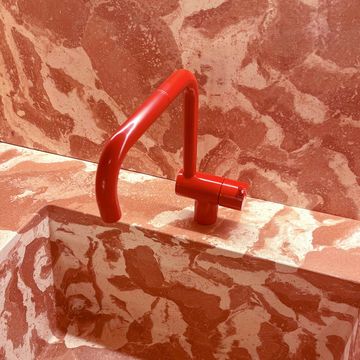
There’s a misconception about dark colours in small spaces. We’ve designed some wonderful small bathrooms using dark tones on the walls and ceilings; they bring depth to a space. One of our favourite restaurants in Milan has a dark-terracotta ceiling – it inspired us when we were choosing the ceiling colour for the womenswear floor at La Rinascente in Rome.

Using tiles beyond the bathroom or kitchen brings an interesting note to an interior. For the ELLE Decor Italia and Airbnb Plus apartment we designed in Milan, we used cream relief tiles by 41zero42 to create a headboard for the bed.
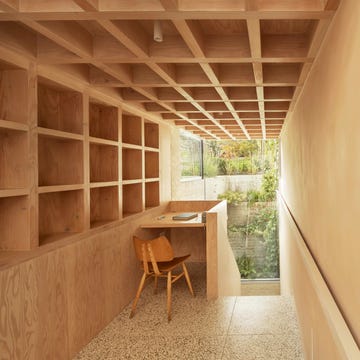
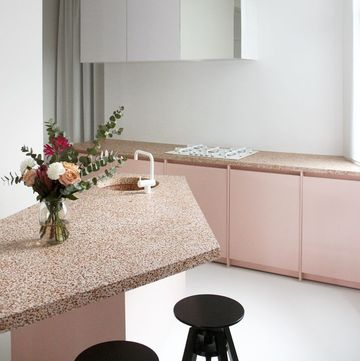
Think about using materials that create contrast. Using an industrial choice like plywood or galvanised metal in a period building will enhance its character. In the Artist House we designed for Airbnb in Civitadi Bagnoregio, which was an ancient building, we used scaffolding tubes for the legs of a terrazzo table.